
Brittle and Ductile Behaviour in Charpy Impact Testing focuses on one defined technical question. Absorbed energy and fracture appearance can change with temperature and material condition, but both should be interpreted within the specified method and criteria.
Impact testing is especially sensitive to specimen geometry, notch preparation, orientation and temperature control. The governing standard and product requirement should be confirmed before machining or conditioning begins.
Charpy impact testing in Guyana measures how much energy a material can absorb before it fractures. This toughness matters most in cold conditions and under sudden loading, where brittle failure is a serious risk. Kheeran Offshore provides Charpy impact testing in Guyana for steels, welds and components used in critical service.
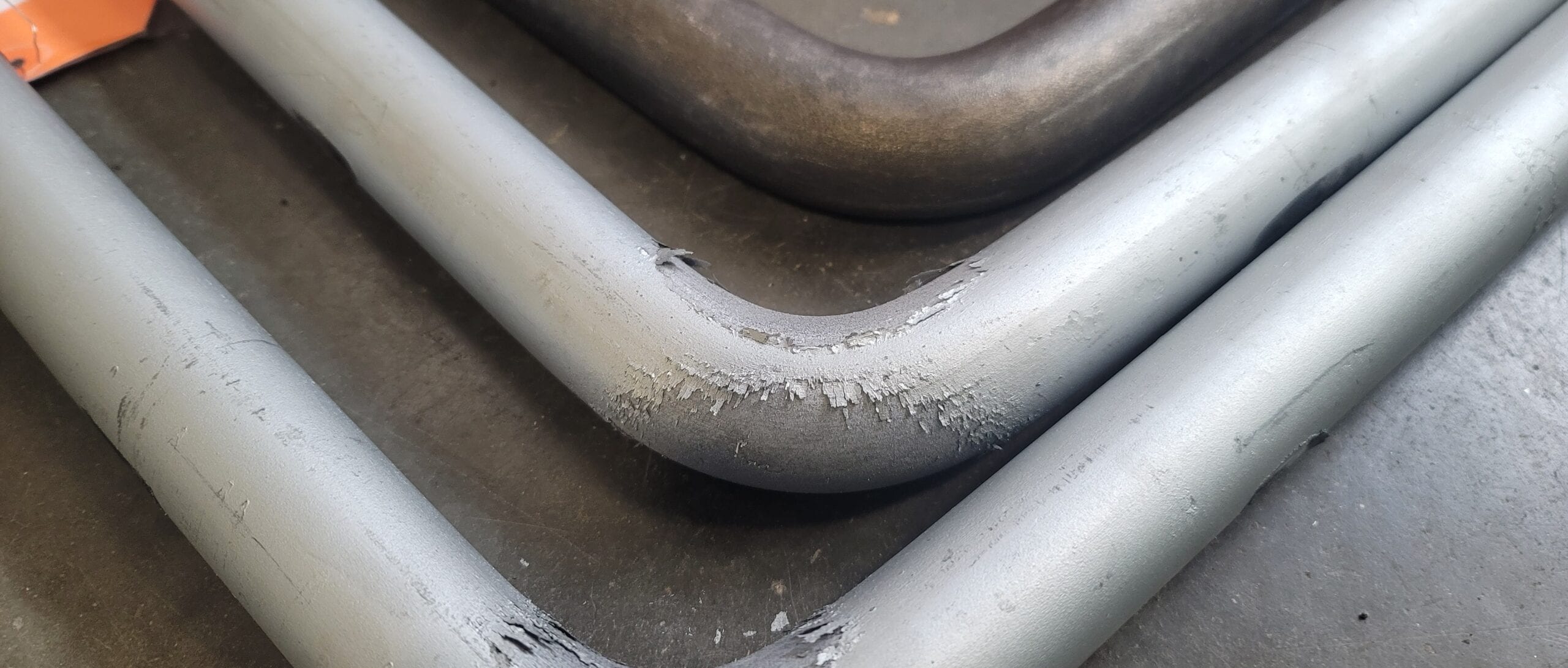
What is Charpy impact testing?
In addition, the Charpy V-notch test strikes a notched specimen with a swinging pendulum and records the energy absorbed as the specimen breaks. A high absorbed energy indicates tough, ductile behaviour; a low value warns of brittle behaviour and a higher risk of sudden fracture.
Why notch toughness matters
In practice, many materials become more brittle as temperature falls. For equipment operating in cold environments, or subject to impact and shock loading, verifying toughness is essential to prevent catastrophic failure. Engineers often specify Charpy testing at reduced temperatures to prove low-temperature performance.
- Confirms toughness for low-temperature service
- Supports welding procedure and material qualification
- Helps assess resistance to sudden, brittle fracture
Applications for Charpy testing
Typically, Charpy impact testing is widely required in the energy and heavy industries. It frequently forms part of welding procedure development and material acceptance programmes.
- Pressure vessels and piping for cold or cyclic service
- Structural and offshore steels
- Weld metal and heat-affected-zone qualification
- Incoming material verification
Standards and reporting
We conduct Charpy testing to recognised methods, including ASTM E23 and equivalent ISO standards, at the test temperatures your specification requires. Each report clearly shows absorbed energy, test temperature and acceptance criteria.
A complete metallurgical capability
Notably, Charpy testing pairs naturally with our tensile testing and metallurgical examination services, giving you a full picture of strength, toughness and structure from a single laboratory in Guyana.
Importantly, with experienced technicians and traceable reporting, Kheeran Offshore delivers dependable Charpy impact testing in Guyana to keep your projects safe and compliant.
The role of test temperature
Overall, temperature is central to Charpy testing. Because many steels lose toughness as they get colder, we often run the test at a specified low temperature that reflects the coldest service condition the material may face. Conditioning the specimen to the correct temperature and testing it promptly is essential for a valid result.
- We machine specimens with a precise V-notch.
- We condition them to the specified test temperature.
- The pendulum breaks the specimen and we record the absorbed energy.
- We compare results against the required minimum values.
As a result, reporting the exact test temperature alongside the absorbed energy is what makes the result meaningful and traceable.
Understanding your Charpy results
Moreover, a set of Charpy values does more than pass or fail a specification. A sharp drop in absorbed energy across a small temperature range, for example, indicates the ductile-to-brittle transition and helps engineers judge safe operating limits. Low values in a weld or heat-affected zone can also flag a problem with the welding procedure.
In addition, our engineers help you interpret these results in context, so you can make sound decisions about material selection, welding procedures and safe service conditions.
Charpy impact testing in Guyana: frequently asked questions
Why is Charpy testing done at low temperatures?
Because many steels become more brittle as they cool, testing at a specified low temperature proves the material has enough toughness for the coldest conditions it will face in service.
How many specimens are usually tested?
Charpy results can vary, so standards typically call for a set of three specimens at each test temperature, with the average and minimum values assessed against the acceptance criteria.
Do you test weld metal and heat-affected zones?
Yes. Charpy testing of the weld metal and heat-affected zone is a common part of welding procedure qualification, and we position the notch precisely to assess each region.
What units are Charpy results reported in?
In practice, absorbed energy is normally reported in joules at the specified test temperature. We present the individual specimen values along with the average, so you can check them against your minimum requirement.
Request a quote today. Contact Kheeran Offshore Guyana on +592-602-5664 (call or WhatsApp), email admin@kheeran.gy, or get a free quote online. Our lab at 319 Eccles Industrial Estate, Georgetown operates 24/7.